Gorbeau House
Les MisérablesGorbeau House is a lodging at 52 boulevard de l’Hôpital in Paris, a precarious refuge where Jean Valjean settles with Cosette and where several poor, unrelated residents occupy neighboring rooms. Its significance lies in this unlikely convergence: a building usually marked by vacancy becomes a meeting point for separated strands of the story.
Setting and Occupancy
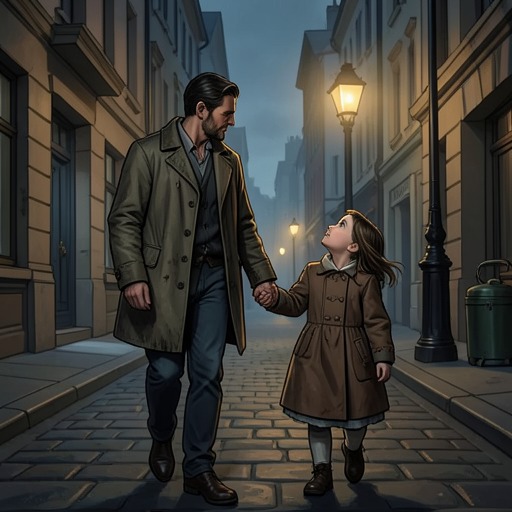
Jean Valjean settles at Gorbeau House after surviving a near-drowning in the port of Toulon and rescuing Cosette from the Thénardiers. The address is given as number 52 boulevard de l’Hôpital; the wider building is also referred to as numbers 50–52. Its ordinary sign advertises rooms for rent, and it is usually deserted. At the time of Jean Valjean’s residence, however, several people live there—an uncommon change in the house’s usual emptiness.
The occupants have no connection with one another. Their circumstances place them across a broad range of poverty, from the last straitened petty-bourgeois household down to the sewer worker and the ragpicker. The description makes the lodging more than a backdrop: its rooms gather people whom the larger social order has left on separate, diminishing rungs of hardship.
Residents and Neighboring Rooms
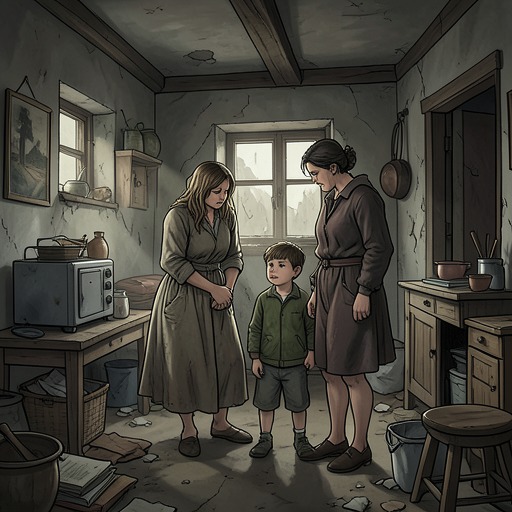
The building links lives that are close in space but not in relationship. The Jondrette family occupies the last room at the end of a corridor; next door, in a small cell-like room, lives a very poor young man, Marius. The proximity of these adjoining lodgings establishes a shared setting for people whose paths would otherwise remain distinct.
The principal female tenant from Jean Valjean’s time has died and been replaced by another much like her. This turnover, alongside the house’s recurrent vacancies and temporary population, gives the lodging a sense of persistent hardship rather than settled domestic life.
A Place of Return and Convergence
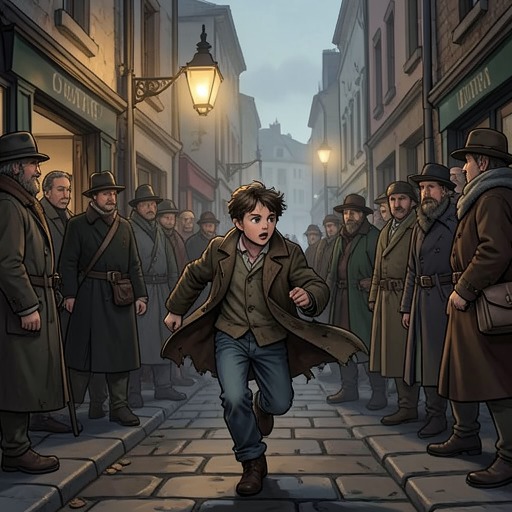
Little Gavroche, who has no home, bread, fire, or love, nevertheless visits his mother every two or three months. He leaves the central boulevards, crosses the bridges, and makes his way to the double-numbered address of Gorbeau House. The visits reveal a private tie hidden within his otherwise unanchored existence: the house is not his home, but it is where he goes to see his mother.
That return brings the building’s different roles into focus. It is Jean Valjean and Cosette’s Paris lodging, the Jondrette family’s cramped residence, the poor Marius’s neighboring room, and the destination of Gavroche’s occasional search for his mother. Its rare, crowded occupancy turns an overlooked address into a point of contact among stories shaped by poverty, separation, and fragile refuge.